After physiotherapy, guidance often stops, exactly when the real rebuilding starts. I take over the baton, in consultation with your doctor or physio where needed.
Your strength. Across a lifespan, strength and power decline up to 8 times faster than muscle mass. So it is strength, not size, that you rebuild first after an injury. A minimal dose of strength training around the joint, with no load through the joint itself, keeps what you have.
Source: Fyfe, Hamilton & Daly, Sports Medicine, 2022 · All the research behind this site
The pain is gone; the strength and confidence are not. Between healing and living fully again lies a journey nobody explains to you.
So you avoid movements, weaken further, and the risk only grows. That spiral is broken with guided, step-by-step loading.
A regular fitness program is not built on your history. You need a plan that accounts for it, exercise by exercise.
We start with an in-depth intake about your injury, your operations and what your doctor or physio advised; where needed I align with them directly. Then we build load step by step, with technique that protects your joints instead of straining them.
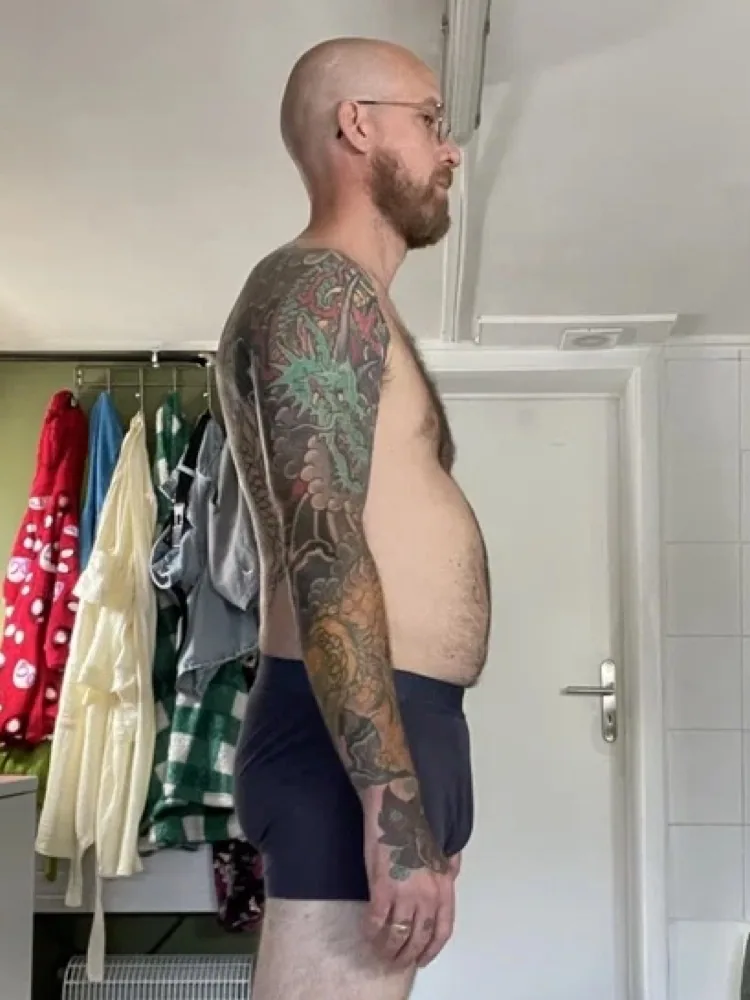
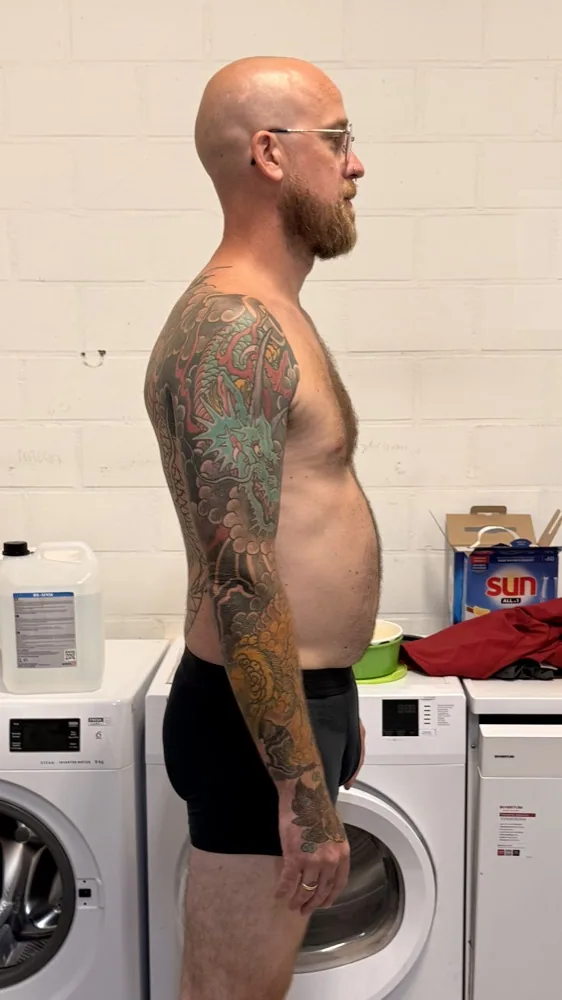
You also learn why every exercise is in the plan and how your body responds, so your confidence grows along with your strength. That is exactly how Paul rebuilt a strong foundation after several hernia operations.
Want personal guidance from the start? See how High Performance 1:1 Health Coaching works.
 Before
After
Drag
Before
After
Drag
After several hernia operations he rebuilt step by step: training smarter and more consciously, without straining his back further.
“Timon is intussen mijn vaste personal trainer geworden. Tijdens de oefeningen zit of ligt hij letterlijk naast je om ervoor te zorgen dat je de juiste spieren activeert en de beweging technisch correct uitvoert. Die hands-on aanpak maakt een enorm verschil in revalidatie én progressie. Zijn kennis van de anatomie is indrukwekkend. Als arts kan ik bevestigen dat zijn uitleg inhoudelijk klopt en onderbouwd is.”
Dr. Charlotte Capiau · huisartsStart with the free health check. In five minutes you know where your Biggest Win is, and then we look at it together in a free call.
Free. Your report appears on screen and in your inbox.
This article is information, not medical advice. If you have symptoms, are pregnant or take medication, talk to your doctor before changing anything.