Chamomile contains apigenin, a compound that binds in mice to the same receptor as calming medication. In humans the evidence is far thinner.
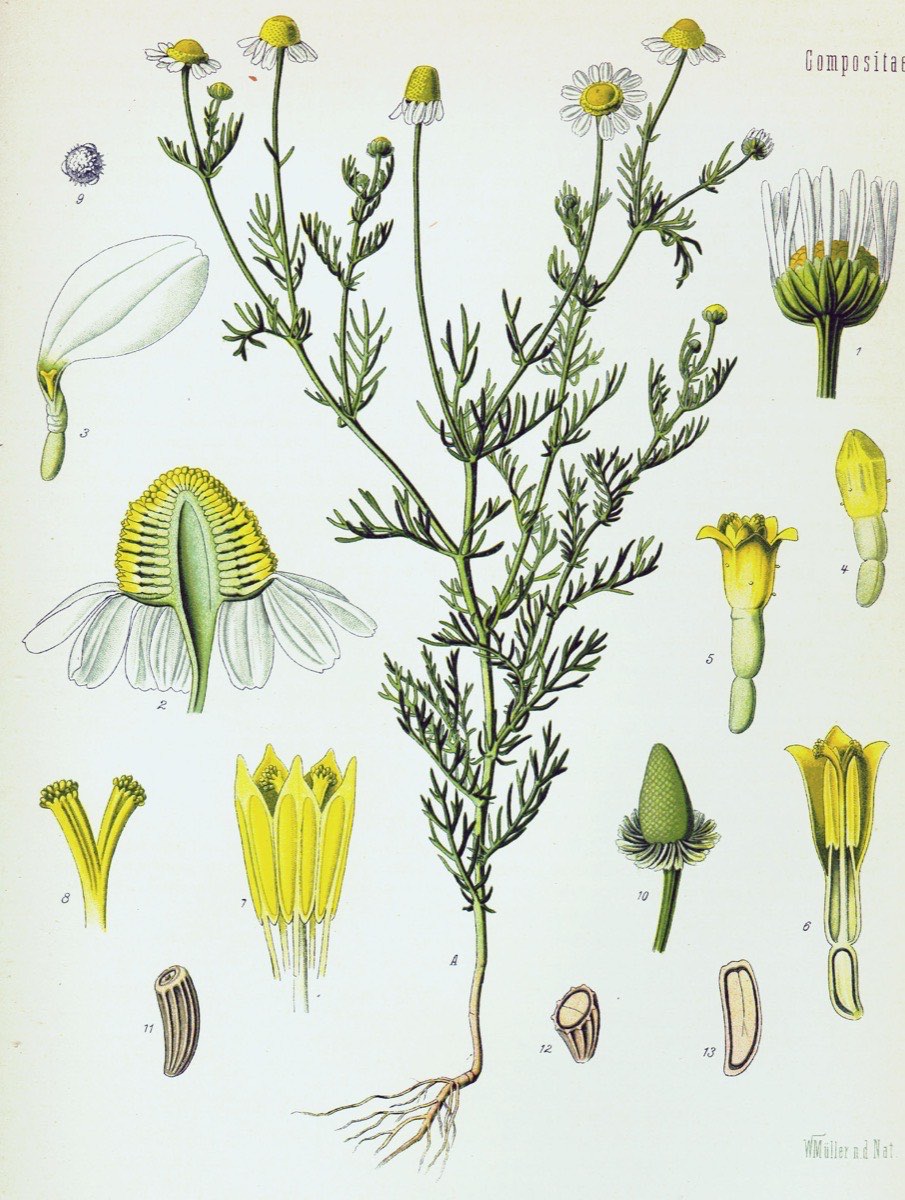
Does chamomile tea help against insomnia? In people with chronic insomnia, chamomile extract did no better than placebo. An analysis of twelve studies did find better sleep quality, always with concentrated extract in capsules. A cup of tea is a different thing, and that is exactly the point.
I passed the claim on in my story: chamomile tea as a natural sleeping pill. Then I read the studies.
Does chamomile work in humans the way it works in mice?
Chamomile contains apigenin. In the lab, that compound binds to the same receptor as calming medication. In mice, a low dose produced an anxiety-reducing effect without drowsiness. Sedation only appeared at a dose ten times higher.
Sounds impressive. Except it was measured in a petri dish and in animals.
Source: Viola et al.1 1995, Planta Medica
In humans the picture looks different. In the only trial on chronic insomnia, 34 participants took 270 mg of chamomile extract twice a day for four weeks. Not a single outcome differed from placebo.
An analysis of twelve studies did find better sleep quality. Those positive studies used concentrated extract in capsules, twice a day. A cup of tea is an infusion of a few grams of flowers, and your body absorbs only a fraction of the apigenin in it. The only study with actual tea, in 80 women who had just given birth, saw better sleep after two weeks. Four weeks later the effect was gone.
So the tea mainly helps as a ritual. Warm, calm, the same every evening. And that counts, because a fixed evening ritual tells your brain the day is over.
Source: Zick et al.2 2011, BMC Complementary and Alternative Medicine; Chang & Chen3 2016, Journal of Advanced Nursing; Hieu et al.4 2019, Phytotherapy Research
Supplements are the last five percent. The first 95 percent sits in your structure.
Go to bed around the same time every day. Keep your phone out of the bedroom. No more caffeine in the six hours before sleep. First thing in the morning, step outside into daylight for a moment.
You need neither a tracker nor fancy supplements. Stick to the basics. And that cup of chamomile? Go ahead and drink it. As a ritual.
Want to know what magnesium actually does, and how much glycine a bisglycinate tablet really holds? That is in magnesium and sleep. On the third claim from my story, salt, I wrote separately: salt and night-time urination.
| Form | What was studied | What you have at home | What it means |
|---|---|---|---|
| Concentrated extract | Capsules, twice a day, four weeks | Rarely at home | The only form studied in humans |
| Chamomile tea | One study in women who had just given birth | An infusion of a few grams of flowers | Works mostly as an evening ritual |
In people with chronic insomnia, the only trial with chamomile extract did no better than placebo. A cup of tea works mainly as a calming evening ritual.
In the lab, apigenin binds to the same receptor as calming medication. In mice a low dose reduced anxiety without drowsiness; at ten times that dose drowsiness did appear.
That has never been properly established. The positive studies used concentrated extract in capsules, not tea.
Timon coaches online across Belgium and the Netherlands and also trains clients in person in Maldegem and Ghent.
Leave a comment below. Say what you think, or tell me which claim to look into. Your comment appears right away and everyone can read it.
What I researched that week, summed up in three sentences, sources included. Unsubscribe any time.
Every number in this article was checked against the original publication.
A pinch of salt before bed is often recommended against waking up to pee. The research points the other way: less salt meant fewer trips to the toilet at night.
Read the article
Magnesium is recommended everywhere for better sleep. If you are deficient it works, otherwise the effect is small. And the glycine in a bisglycinate tablet is a fifth of the dose that worked in research.
Read the articleTwenty questions, three minutes and your report appears right away: your Health Score, your Biggest Leak and your First Building Point. Backed by 130+ scientific sources.
 TIMON DHAEZE